Leadership
Genius Not Required
Raj Gupta closed a $19 billion deal, but measures his legacy in people. On mentors, character and a meaningful life beyond the corner office.
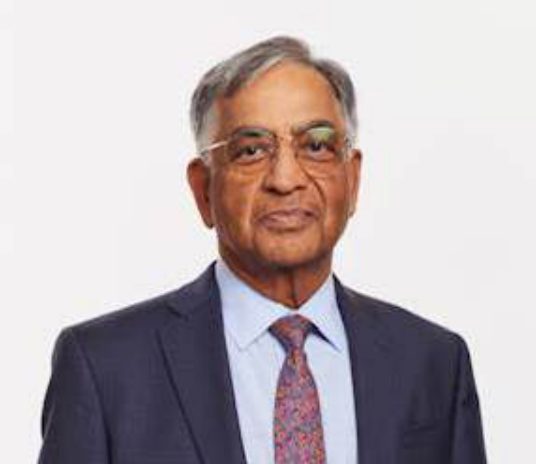
Raj Gupta’s journey is one of those rare stories that stretches from IIT Bombay classrooms to the very top of corporate America. A 1967 Mechanical Engineering graduate of IIT Bombay, Raj came to the United States on a fellowship to pursue a master’s in Operations Research at Cornell University, later earning an MBA in Finance from Drexel University.
He went on to spend 39 years at Rohm and Haas, rising through 13 roles across the U.S., Europe and Asia to become Chairman and CEO in 1999—at the time, only the third CEO of Indian heritage in the Fortune 500. During his decade at the helm, he led a major transformation of the company and ultimately steered its landmark $19 billion sale to Dow Chemical during the global financial crisis.
Raj’s influence extends far beyond one company. He has served on 15 public-company boards, including leadership roles at Avantor, Aptiv, Hewlett-Packard and Arconic. Remarkably, 53 Rohm and Haas alumni he worked alongside went on to become CEOs themselves.
His honors include IIT Bombay’s Distinguished Alumnus Award, USPAACC’s Ten Most Influential Asian Americans in Business, Drexel’s Business Leader of the Year, and the Society of Chemical Industry’s Chemical Industry Medal. Through the Ujala Foundation, Raj and his wife Kamla have also supported more than $40 million in education and healthcare initiatives across India and the United States.
When Rajiv L. Gupta - Raj to the many who know him arrived in the United States in the spring of 1968, he intended to stay for two or three years. He had a fresh degree from the Indian Institute of Technology, Bombay, a fellowship to study operations research at Cornell, and an arranged marriage to Kamla. The plan, was simple: gain some experience and return home to India.
He never did go back. Instead, Raj built a 39-year career at Rohm and Haas, rising through 13 different jobs under 17 bosses to become its chairman and chief executive in 1999. Over the following decade in 2009, he negotiated and held together its $19 billion all-cash sale to Dow Chemical - a deal the industry press called “the deal of the century.”
Yet what Raj himself returns to, is not the scale of the deals or the size of the titles. It is the parent’s values and people who shaped him, and the Rohm and Haas colleagues he mentored who have gone on to lead companies of their own around the world. “I am always reluctant to self-brag,” he told me. So we agreed to do it as a conversation instead. What follows is drawn from a series of exchanges about his journey, lightly edited, in his own voice.
Formation: An Outsider’s Education
Pandya You’ve said your parents practiced their values. How did that shape you?
Gupta Growing up, we witnessed that many, perhaps most of my father’s peers had expensive cars, sent their children to high-priced boarding schools, My father was a civil engineer in government service, he never took a single rupee in a bribe. By comparison, we lived within our means — a simple but very comfortable life. That example stayed with me.
Pandya You were one of six children. How did those early years prepare you for what came later?
Gupta In my first 15 years we lived in five cities across Uttar Pradesh, and I changed schools many times. That taught us to adapt. One of the most painful events came in 1954, when I was nine. The six of us ranged from three to ten years old when my father was diagnosed with encephalitis and hospitalized for six months. Even as a nine-year-old I worried about how we would survive if something terrible happened to him. He recovered, but he was never quite the same person again. My mother kept the family together and navigated challenges on multiple fronts.
What I remember, too, is that the pressure at home was never about standing first in class. When my older sister finished at the top of her school, it quietly raised the aspirations of all of us. The combination of those early experiences made me comfortable and confident in my ability to adapt, survive, and thrive.
Pandya Two institutions stand out in your account — BNSD in Kanpur and IIT. What did they teach you?
Gupta My four years (8th – 11th grade) at BNSD in Kanpur were transformational. BNSD was proud that, four to six of the top rankers came from our school. Two things came from that: you learned to compete, survive, and thrive in an intensely competitive environment, and the dedication of teachers pushed us to realize our potential.
My five years at IIT Bombay, from 1962 to 1967, were a step up, as the competition came from the best of the best from around the country. There was another dimension as well: a year at Aligarh Muslim University. We lived through a brutal Hindu–Muslim conflict in the fall of 1961 that shut the university down for a month. I finished at the top of my class and learned to adapt and stay focused — to survive and thrive in an adverse environment.
Pandya What did learning to compete with the very best teach you about talent and opportunity?
Gupta My biggest takeaways from Aligarh and IIT served me well throughout my career. The first was to stay focused on my priorities, my purpose, and my principles. Each of us is eventually judged and accepted as an individual. I also learned to attribute bias to ignorance rather than to ill intent. That conviction helped me navigate my personal and professional life.
The Making of a Leader
Pandya You came to America for two years and stayed 39. How did that happen?
Gupta My family’s background was formed by government service — both my father and maternal grandfather were civil engineers. I enjoyed my five years at IIT Bombay and graduated second in my class, but engineering was never my passion. I had no clue what my passion actually was.
I came to Cornell in the spring of 1968 for a master’s degree in operations research on a fellowship. I was fortunate to receive four job offers, from IBM, Burroughs, Xerox, and Scott Paper. I chose Scott Paper, for three reasons: my father’s younger brother, lived nearby; we were expecting our first child and Philadelphia was the warmest of the options.
Those two and a half years at Scott were wonderful. I solved real business problems, and also got to know the head of strategy. It drew me toward business management, which led me to an MBA in finance at Drexel’s night school, funded by Scott. But my parents still hoped I would return to India, so I began looking for a finance role at a company with a presence there. That search led me to Rohm and Haas in November 1971.
Pandya And one mentor’s promise, in particular, changed your trajectory.
Gupta My analytical work caught some attention, and in 1973 I was made global cash manager, working for the treasurer, a man who would later become a CEO, and one of my key mentors. One day, the CEO, Vince Gregory, offered me a role as his assistant and asked me to develop the company’s 5 year plan. I presented that plan to two hundred senior leaders from around the world. I was nervous beyond belief.
Then came the oil crisis of 1974–75. From record sales and earnings, the company reported its first loss. We worried about our ability to pay interest on time. I learned how to stay focused and calm, to exit businesses where we were sub-scale, and to watch how the CFO and CEO communicated transparently with the Haas family. We stabilized the situation and entered 1976 well positioned.
Some years later I was offered the role of CFO of our UK operations, our largest business outside the US, but underperforming. I was hesitant to move. Vince Gregory had lived in the UK for a decade. He noticed my hesitation and “Raj,” he said, “Here is the deal, go ahead, and if after six months you are not happy, call me and we will bring you back. I have full confidence that you will do just fine.”
In some ways, the rest is history. That move led to 15 years in Europe across six different jobs, then five years leading our Asian business and eventually the CEO role. In all, I held 13 jobs under 17 bosses over 39 years. My mentors — Fred Shaffer, who recruited me; my two predecessor CEOs, Vince Gregory and Larry Wilson; and Dr. Basil Vassiliou gave me their trust and unconditional support. I am deeply indebted to them.
Pandya Through all of this movement — across countries, jobs, and continents — Kamla was your constant. What has her role been in your success?
Gupta None of this would have been possible without Kamla. She deserves incredible recognition for raising our family through the challenges of moving around the world and keeping us close to our extended family. She was my traveling companion, and she helped me build relationships with colleagues and customers in a way I never could have alone.
And she did all of this while pursuing her own interests, playing the tabla, learning tennis and golf, and becoming genuinely good at them and being an extraordinary mother while I was so often on the road.
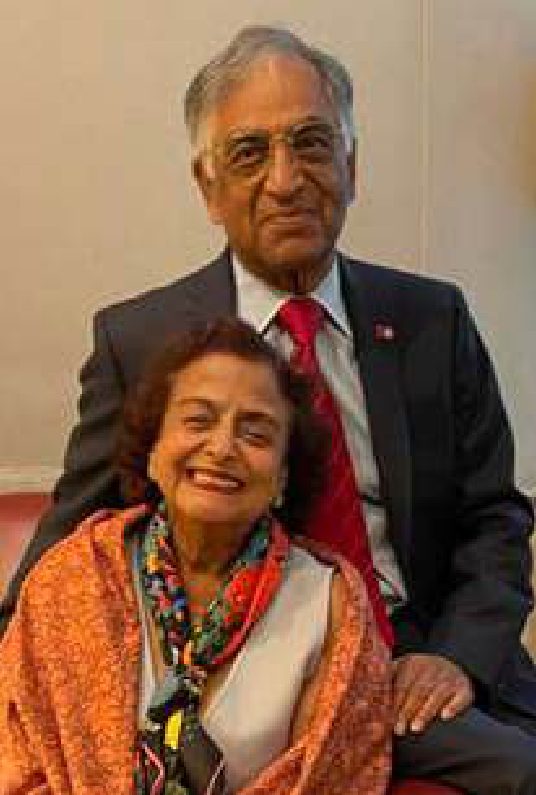
She also carried far more than her share of our family’s hardest moments. She lost two of her sisters, both in their twenties, one in a car accident and one in a fire. She stood by me through my prostate cancer. When I count my blessings, I begin with her.
The CEO Decade — and the Deal of the Century
Pandya How did the CEO succession unfold?
Gupta In the fall of 1997, after a board meeting, Larry told me that I was one of three candidates to succeed him, On the Friday before the July Fourth weekend in 1998, Larry asked to see me and one other colleague late in the day. I went first and was told the board had chosen me as chairman and CEO. My first call was to Kamla.
Pandya Your decade as CEO began with a bold and risky transformation.
Gupta In just six months, from the fall of 1998 to the spring of 1999, we transformed the company’s portfolio. In that short period, we made three acquisitions for a total of $5.5 billion, went from thirty-five to a hundred and five manufacturing sites, grew from ten thousand to twenty-three thousand employees, and took on $4 billion of debt, from a starting point of zero — all while the leadership was changing. We had sixty-four separate information systems, and our share price fell from the mid-forties to the mid-twenties in a matter of months.
It was a very challenging time, but we were confident we could navigate through. I set three priorities: invest in one global information system; never compromise on R&D or on investing in Asia; and ensure positive cash flow. It took us two years and we were back on track by the end of 2002, and we had a great run from 2003 to 2008.
Pandya And then came the sale to Dow — forged at a premium just before the markets crashed. In your account for Harvard Business Review, you described keeping that deal alive as one of the hardest things you have ever done.
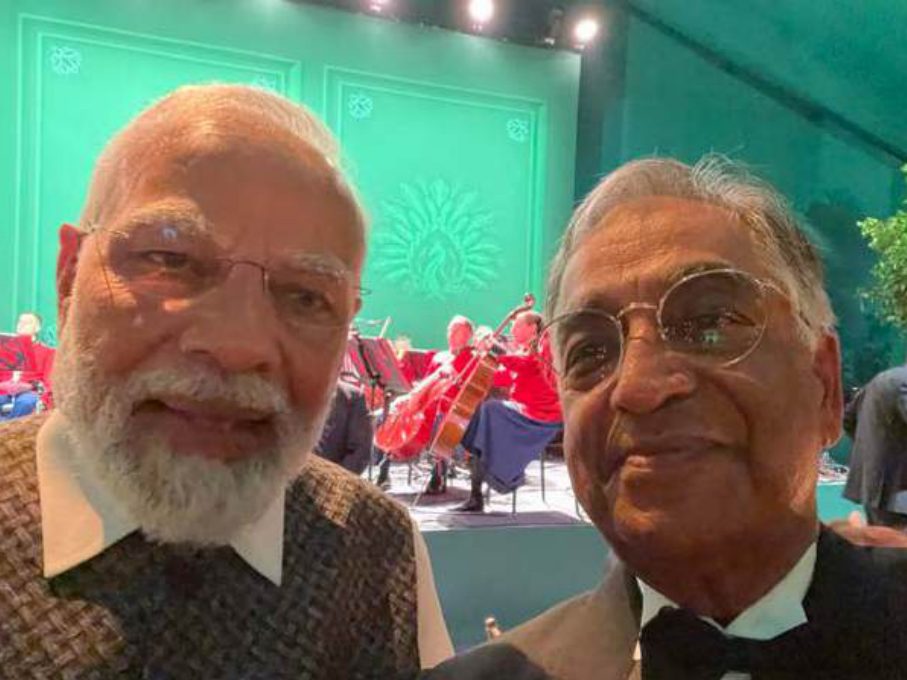
Gupta In November 2007, representatives of the Haas family trusts, asked me to explore selling all or most of their holdings. The board and I had perhaps naively believed that as long as John C. Haas was alive, no such request would come. Soon Andrew Liveris of Dow came to Philadelphia with an all-cash offer of $74 a share. After the board fulfilled its duty to test the market, we announced the deal on July 10, 2008, at a final price of $78 a share. The shareholders were delighted, and the industry called it the deal of the century.
Then the financial markets crashed. A $9.5 billion joint venture that Dow had been counting on with Kuwait Petroleum collapsed. For months, I lived a double life, only a handful of people knew the full picture and I was getting emails at midnight asking, “Are you awake?” In August, I learned I had prostate cancer, which added a new dimension to the stress. A low point came when I passed out on a flight to Germany and had to be admitted for emergency care. I withdrew from day-to-day operations to focus on my health; my sole remaining responsibility was seeing the deal through.
We eventually had to file suit in Delaware to enforce the contract. The whole world was watching. Less than a week before we were due in court, Andrew wrote to me: “Raj, should we give this one last try?” Dow found creative financing, persuaded the rating agencies to keep its investment-grade status, and on one of the lowest days of the year for the stock market, its directors signed off. In the end, we got the $19 billion. I left Rohm and Haas for the last time on March 31, and the deal closed the next day. It was a bittersweet victory.
My biggest takeaways from that decade are three. In a changing environment, a bold strategy is better than an incremental one. The right talent and a focus on execution are critical to delivering results. And the trust of your key stakeholders is vital — it requires frequent and transparent communication, especially when the news is hard.
Mentorship, Legacy, and Giving Back
Pandya Mentorship runs through your whole story. What did you come to understand about it?
Gupta Mentorship never ends. Looking back, my parents were my first mentors, then a professor at IIT Bombay, then my boss at Scott Paper, and several people at Rohm and Haas. True mentors do not just praise you. They are comfortable giving you honest feedback about what you could do better. They see your potential, but they also see what will hold you back from realizing it.
I owe my long board career to my mentors, beginning with Larry Wilson, who helped me onto my first two boards. Once I became CEO, the gates opened, and I ended up serving on various public and private company boards. One of my greatest mentors was Jack Krol, the former CEO of DuPont, who brought me onto the Tyco and Delphi boards. From John Haas, I learned the importance of preserving a company’s culture and values.
My own experience with mentors moved me to become one. That, is what I am proudest of: fifty-three Rohm and Haas alumni have gone on to serve as CEOs around the world.
Pandya Beyond serving on public company boards, what has kept you engaged in your retirement?
Gupta Learning and sharing ideas and experiences is my passion. One of the most rewarding has been my seventeen-year association with Steve Klinsky and New Mountain Capital. It has let me both contribute to and learn from an alternative way of building businesses.
I have also been fortunate to have a close association with two Wharton professors, Harbir Singh and Mike Useem, and with Harvard Business School professor Lynn Paine. I teach in executive sessions. Some years ago, I also documented my own story in a book, which began as a family history for my grandchildren and grew into something a wider audience found useful.
Pandya A central message you want to leave with younger readers is that you don’t have to be a genius to lead a meaningful life.
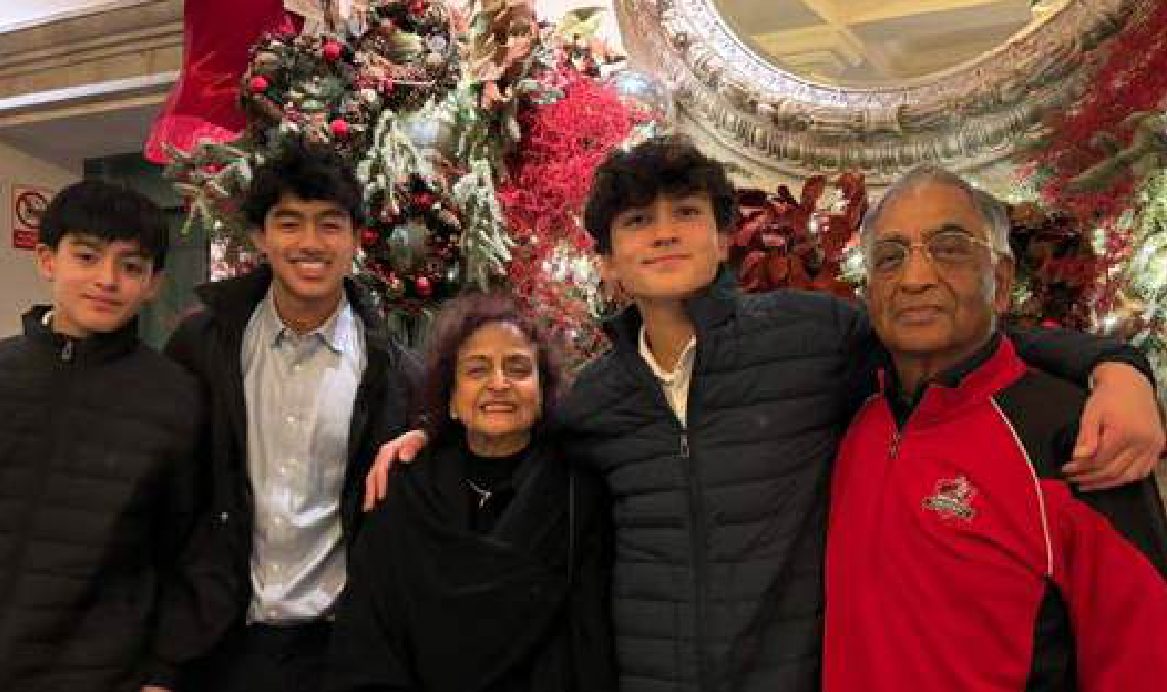
Gupta That is the heart of it. You do not have to be an outlier or a genius to lead a meaningful, impactful life. Everyone has a chance. Accessible, values-based leadership looks like staying focused on your purpose and principles, treating people with respect, doing your best wherever you are placed, and being honest - the very things I watched my parents practice when I was a boy. None of it requires brilliance. All of it requires character.
Pandya Finally — how do you measure legacy?
Gupta Not by what I achieved. I measure it by the impact my Rohm and Haas colleagues have had around the world and the values they have carried forward, and by having raised two daughters with the freedom to pursue their passions. If I am remembered for anything, I would want it to be that — that the people I worked with and the family we raised went on to do good in the world. That is a fuller life than any title or any deal could ever provide.
About the authors
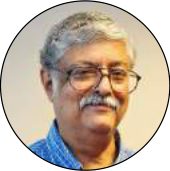
Mukul Pandya is a former associate fellow and consulting editor for Saïd Business School at the University of Oxford, and former executive director and editor in chief of the Knowledge@Wharton Network.
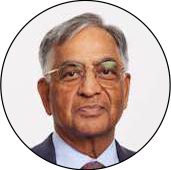
An IIT Bombay graduate (1967), Raj Gupta studied at Cornell and Drexel before a 39-year career at Rohm and Haas, where he rose to Chairman and CEO, becoming the third Fortune 500 CEO of Indian heritage. He has served on 15 corporate boards, including Hewlett-Packard and Aptiv, and received IIT Bombay’s Distinguished Alumnus Award and the Chemical Industry Medal.
Comments
Comments open soon.