Reimagine India
A Meeting of Minds and Hearts
Social Entrepreneurship: A Meeting of Minds and Hearts What is social entrepreneurship? Why do people stay away from it? And why should IITians get involved?
When we think about engaging with social issues, a wave of familiar hesitation often kicks in:
“I’m a technology person, not a social worker.”
“The problems are too big for me to solve.”
“I’m just too busy.”
“I can’t make a living or build a viable business helping people.”
“Someone else is already working on it.”
I know these reservations well because my entry into social enterprise happened almost by accident.
After completing my Master’s in the US, I was eager to pursue my entrepreneurial dreams. I knew I wanted to build a business, but I wasn’t entirely sure what or how. I stumbled upon the world of artisan-crafted goods and decided to explore India’s traditional craft sector as a source for products.
Traveling from village to village and meeting artisans across India was an awakening. I saw incredible master craftspeople trapped in a cycle of poverty simply because they lacked market access. They faced a heartbreaking dilemma: continue practicing their ancestral art and live in poverty, or abandon their heritage to move to urban slums for daily wage work.
What started as a commercial venture suddenly revealed a deeper calling: to build a sustainable enterprise that could preserve traditional art while securing dignified livelihoods.
The Realization: It Isn’t Charity—It’s Partnership
My biggest takeaway over the years—building ventures like Matr Boomie, Kandu, and working on local social initiatives—is that social entrepreneurship is not charity.
In the beginning, I thought I was going to “help” rural communities. But as we worked together, I realized I wasn’t rescuing anyone. The artisans brought heritage, unmatched craft skill, and dedication to the table; I brought access to global markets and design frameworks. It was a mutual partnership where the community was enabling my enterprise just as much as I was supporting theirs.
Furthermore, as we spent time on the ground, we realized that sustainable income was tied to broader community challenges—like healthcare, clean water, utility access, and education for girls. We started organizing free eye-care camps, supporting local schools, and building social infrastructure.
Later, when I applied this mindset to challenges closer to home in Austin, Texas—working on homelessness initiatives and creating jobs for women navigating difficult life transitions—the core principle remained the same:
When all stakeholders rise together, the entire community becomes stronger.
What’s in it for us? (The Unspoken ROI)
When we talk about social work, we usually focus on what we give. But the truth is, what you gain personally and professionally is just as transformative.
Deep Personal Gratification: There is a unique, lasting satisfaction that comes from seeing your skills directly improve someone else’s life. It provides a sense of purpose that a corporate milestone or product release simply cannot replicate.
Belonging and Deeper Community Connection: Many of us, especially those living abroad, can sometimes feel disconnected from the social fabric around us. Engaging in local or global social projects allows us to truly embed ourselves in our communities. You go from being a resident to being an active, accepted, and integral part of the community.
Broader Leadership and Skill Development: Our day jobs—while rewarding—can often be narrow in scope or hyper-specific in approach. Social challenges force you out of your comfort zone. You learn adaptive leadership, stakeholder management across diverse backgrounds, cross-cultural communication, and creative resource management. It expands your perspective in ways that make you a better leader in every aspect of life.
Why IITians Are Built for Social Enterprise
Social challenges are inherently complex, layered, and chaotic—exactly the kind of environments IITians are trained to navigate. We learn to analyze complex systems, break down unstructured problems, and build scalable solutions.
Tackling a tough social puzzle yields the exact same “intellectual high” as solving a complex engineering or tech problem—with the added reward of seeing a real human impact.
You don’t need a degree in social work or decades of experience. The biggest qualifications needed are:
Curiosity to look closely at a problem.
Common sense and technical rigor to structure a solution.
Commitment to follow through.
How You Can Engage (On Your Own Terms)
You do not need to quit your job or commit 100% of your time to make a difference. Social enterprises need the exact same functional skill sets that power corporate giants:
Advisory & Strategy: Help a young social enterprise refine its supply chain, financial modeling, or scaling strategy.
Tech & Innovation: Apply data, AI, software, or engineering solutions to address water access, agricultural efficiency, or digital connectivity.
Marketing & Business Development: Use your networks to open global market channels for impact-driven products.
Mentorship & Volunteering: Give a few hours a month to mentor founders or step into local board/leadership roles.
A Call to the Class of 2000 (and Beyond)
Talking to fellow alumni from my era (Batch of 2000), I find that almost everyone reaches a stage where they want to give back—they just don’t know where to start.
My advice is simple:
Be curious, stay aware of your community, and take a small step.
Look around, don’t shy away from complex issues, and stay open to learning outside your usual domain. You don’t need a master plan to start—you just need to step forward. Who knows? You might just have an apple fall on your head.
About the author
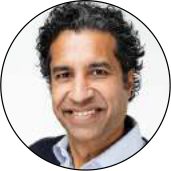
Manish Gupta was struck by the material poverty in rural India and began to build a model of trade and started Matr Boomie. He started partnering with grassroots organizations to transform unskilled women and men into master artisans. Manish established a team in India and in Austin, Texas, to design collections and build a supply chain that entice Western Market while honoring the culture & craft of India. Two decades later, that little company has grown into a leading fair trade wholesaler and innovator in ethical, sustainable business. Manish is also actively involved in creating opportunities for at-risk communities and fighting homelessness in Austin, TX.

Comments
Comments open soon.